Why do laboratories trust the Celnovte IHC stainer for routine testing?
Why routine laboratories look first at control, traceability and fit
Routine IHC work is trusted when every slide can move through the same controlled process: the right case is identified, the right protocol is selected, the heating and reagent steps are repeatable, controls are reviewed, and any problem can be traced before a report is released. That is the practical question for a Celnovte CNT320 evaluation: does the instrument make daily staining easier to control in the laboratory's own workflow?
The celnovte ihc stainer is described by Celnovte as a 60-slide fully automated IHC/ISH stainer for medium- to high-throughput pathology laboratories. The published workflow covers slide baking, deparaffinization, antigen retrieval, blocking, detection and counterstaining. For routine testing, that matters because the lab can move repeated manual steps into a defined instrument process while still keeping responsibility for slide preparation, protocol validation, control review and final interpretation.
Daily loading and case tracking
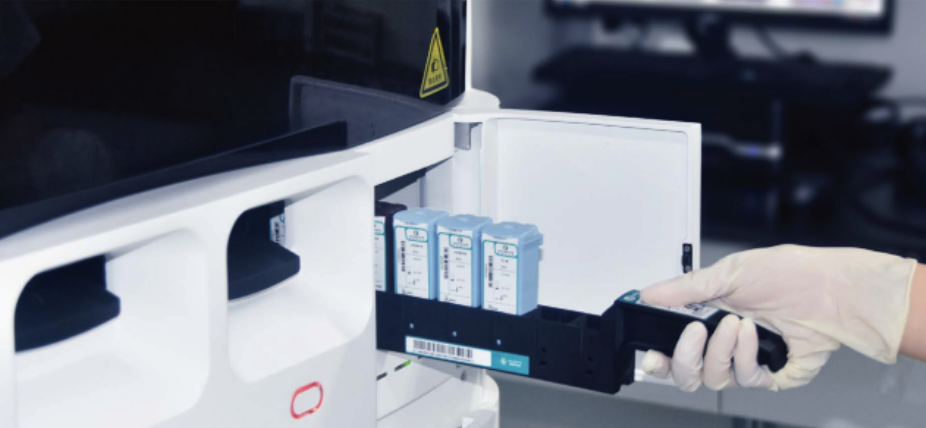
The CNT320 is specified for six 10-slide trays, with continuous loading and unloading. In a routine service, that can help when new surgical pathology cases arrive throughout the day and the lab does not want to wait for a single full batch. Celnovte also lists automatic barcode recognition using camera and infrared technology, plus LIS integration and customizable protocols. Those features are useful only if they are mapped to the laboratory's accessioning rules, label format, and result-reporting workflow during installation.
The manufacturer lists a turnaround time of ≤3.5 hours and states that the CNT320 supports up to 180 tests per day, with the FAQ noting that actual speed depends on staining protocols and laboratory workflow. A lab should therefore compare those figures with its own antibody menu, rush-case policy, staffing pattern, and expected mix of single-marker and panel work.
Protocol control during staining
Celnovte's specification lists 60 individual heating units, with slides heated up to 100°C for antigen retrieval. It also lists adjustable dispensing volumes of 100 µL, 120 µL and 150 µL, 72 reagent positions, 7 mL and 30 mL reagent containers, and visual monitoring of reagent volume, running time and fault messages. These details are relevant to repeatability because IHC performance is sensitive to retrieval conditions, incubation steps, reagent coverage and the way each antibody protocol is set up.
Those specifications are not a substitute for local assay work. Before routine patient use, the lab still has to decide which antibody clones, detection chemistry, tissues, scoring systems and controls will be run on the instrument, then confirm that each assay behaves acceptably under those local conditions.
Quality checks remain part of every run
The instrument can support a controlled process, but routine confidence comes from the laboratory's quality system. After a run is complete, staff still review expected positive and negative controls, staining intensity, background, tissue preservation, slide identity and any instrument messages before results are released.
The CAP guideline update on analytic validation of immunohistochemical assays addresses validation or verification of predictive and nonpredictive IHC assays and revalidation after changes in assay conditions. For U.S. laboratories, CLIA quality-system requirements for nonwaived testing include procedure manuals, equipment and reagent controls, maintenance and function checks, and control procedures; they also state that fluorescent and immunohistochemical stains must be checked for positive and negative reactivity each time of use. Together, these sources place the decision in the right context: the stainer supports a controlled process, while the laboratory verifies that its assays and controls work on that process.
What to check before relying on it for routine testing
A practical CNT320 evaluation should cover the lab's expected slide volume, antibody menu, reagent storage plan, DAB and non-hazardous waste handling, LIS connection, barcode format, service response, preventive maintenance, and staff competency checks. If the lab needs a regulatory document, current IFU, market-specific certificate, or detailed protocol package, those documents should be requested from Celnovte during procurement and kept with the validation file.
The strongest routine-testing reason to choose the CNT320 is therefore straightforward: it offers a documented 60-slide automated IHC/ISH workflow with continuous loading, barcode support, individual slide heating, selectable dispensing volumes, reagent monitoring, LIS compatibility and enough reagent positions for a medium- to high-throughput service. It earns trust in practice when those features are connected to validated protocols, daily controls and clear review rules.